Compare more than one market
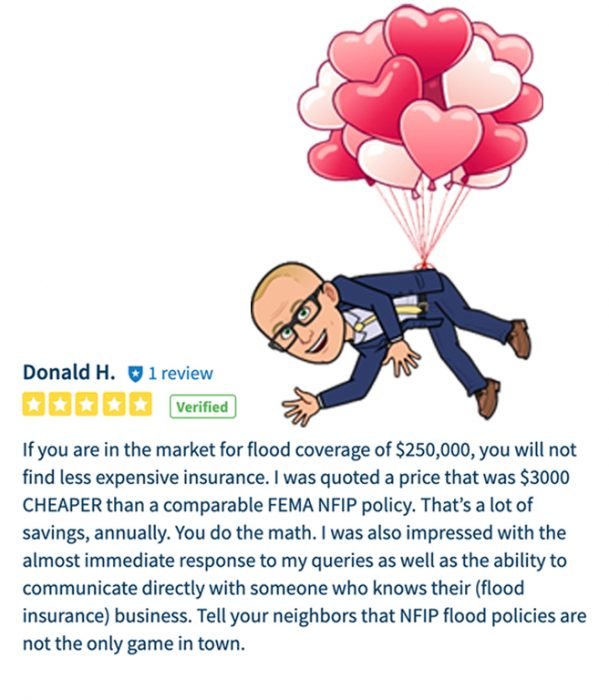
The NFIP and private carriers use different rating models. One may price your home well below the other — or decline it. Comparing both is the single biggest lever, and it's the one most homeowners skip.

Flood insurance doesn't have to break the bank — if you know where to look. The most affordable policy is the one that prices your property fairly and still pays when water comes in. Here's how to find it, and the levers that actually move your premium.

Compare the NFIP and private flood carriers for your exact property, then set your coverage and deductible on purpose. Flood insurance is priced home by home, so the same house can get very different quotes from different markets. Most homeowners only ever see one price.
"Affordable" means something different in every town. Pick your state and city to see the range of real Better Flood quotes for $250,000 of building coverage — then let a Flood Nerd find where your home lands in that range.
There's no sugarcoating it — flood insurance costs have gone up. The good news? You have more control than you think. These are the levers that actually move your premium.
The NFIP and private carriers use different rating models. One may price your home well below the other — or decline it. Comparing both is the single biggest lever, and it's the one most homeowners skip.
A higher deductible lowers the premium. NFIP residential deductibles go up to $10,000. Pick the highest one you could actually pay after a flood — not the highest one available.
Building and contents are priced separately. Insure the building to its rebuild cost (or your lender's minimum), and set contents to what you'd really replace. Don't pay for coverage you don't need — or skip coverage you do.
Under Risk Rating 2.0, an elevation certificate is optional for most NFIP policies — but if your home sits above the expected flood level, it can lower your rate. Private carriers may also price better with one.
Flood vents, an elevated building, or moving equipment above the flood level can reduce your rate. Many communities also earn NFIP discounts through FEMA's Community Rating System.
Flood maps change. Rates change. Carriers enter and leave markets. A policy that was the best deal at closing may not be the best deal at renewal — so check your options every so often.
Some homeowners do best staying with the NFIP. Others get more coverage or a better price in the private market. There's no one-size-fits-all flood insurance.
The last thing you want is to think you're covered, only to find out you're not when it's too late. A low price can hide a coverage limit below your rebuild cost, a deductible you couldn't pay, actual-cash-value payouts on your belongings, or a policy your lender won't accept.
If you're tired of wondering whether you're overpaying — or worse, whether you're even properly covered — we've got you. Here's what a Flood Nerd does, free.
We compare the NFIP and the private carriers that will actually write your property — so your decision comes from a real comparison, not a menu of one.
We estimate your real rebuild cost and tell you what we’d buy — including replacement cost where the market offers it for your property. If you’d rather carry less, that’s your call, and you’ll make it knowingly.
We read the policy jacket before we recommend it, flag the terms that drive most flood claims — waiting periods, contents valuation, caps, major exclusions — and show you where the rest lives.
We place coverage only with underwriters rated A- or better for financial strength.
We prepare the policy file to your lender’s standards, so flood isn’t the thing that slows your closing.
From a licensed Flood Nerd — and every recommendation passes a second Nerd’s review before it reaches you.
Our promise: if the policy you already have is the right fit, we’ll tell you to keep it. We sell both the NFIP and private — so we have no reason not to.
Coverage descriptions are general; the terms and exclusions of the issued policy control. Recommendations are based on the information you provide and the markets available for your property, and no statement here guarantees coverage will be offered or that any claim will be paid.
Compare the NFIP and private carriers for your property, choose the highest deductible you could comfortably pay, set building and contents limits to what you'd really need, and use an elevation certificate or mitigation credits if they help your rate. Then recheck your options at renewal.
Often, if you could pay it after a flood without hardship. A higher deductible lowers your premium, but it's money out of your pocket on every claim. Some lenders also cap how high your deductible can be, so check before you raise it.
It can. Under Risk Rating 2.0, most NFIP policies don't require one, but if your home sits above the expected flood level, submitting an elevation certificate may lower the rate. Some private carriers price better with one too.
Yes, but carefully. If you have a federally backed mortgage in a high-risk zone, your lender requires building coverage of at least the lesser of the loan balance, the NFIP maximum, or the building's replacement cost. Below that, you risk force-placed coverage — and a claim check that won't rebuild your home.
Many NFIP policies are moving toward their full-risk price under Risk Rating 2.0, and annual increases are allowed by law until they get there. Map changes, coverage changes, and fees can also raise your bill. Comparing the private market is one way to see whether a better price exists.
Get quotes from both the NFIP and private carriers at the coverage amount your lender requires, then compare deductibles your lender will accept. Lenders must accept private flood policies that meet federal requirements, so the lowest-priced compliant policy may come from either market.
We built a whole toolkit for the people who send us buyers — same-day quotes, a lender-ready file, closing scripts, and a direct line to a Nerd. We price the NFIP and private markets together, so a high flood number doesn't sink the deal.
Expert guidance with no confusing jargon, coverage tailored to your property, and a side-by-side look at the NFIP and private markets. All without the headaches.
Privacy & communication consent. Your information is never sold, and is used only to shop for flood insurance on your behalf. We're paperless — by submitting, you consent to texts and emails from Better Flood and Your Flood Nerds about your quote, policy, and relevant flood updates. You can opt out at any time. See our terms of use and privacy policy.
Estimates are drawn from real Better Flood quote data and are not a quote for your property. Coverage descriptions are general; the terms and exclusions of the issued policy control. Recommendations are based on the information you provide and the markets available for your property, and no statement on this page guarantees coverage will be offered or that any claim will be paid.
or use a valid email address.